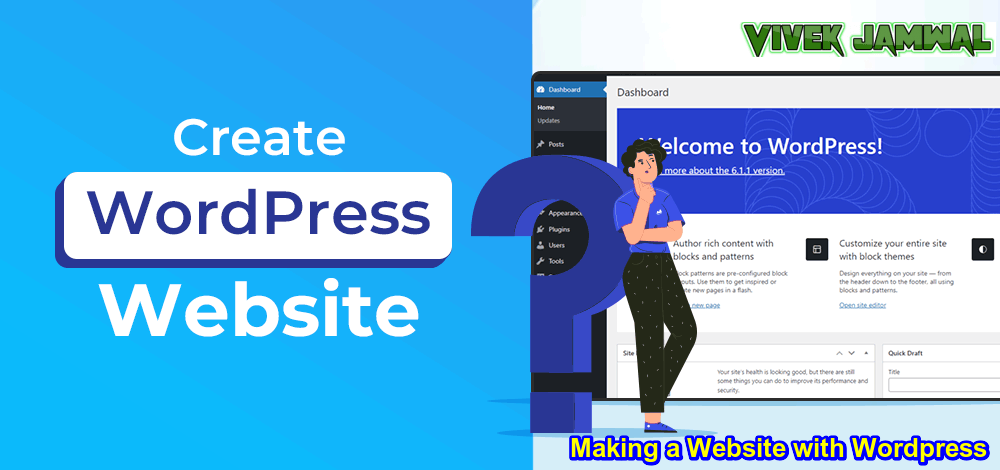
Making a Website with WordPress
Making a website with WordPress is one of the most effective ways to establish a strong online presence for individuals, startups, and businesses. WordPress is a powerful, flexible, and user-friendly content management system (CMS) that enables users to build professional websites without advanced technical skills. With thousands of customizable themes, plugins, and built-in SEO features, WordPress allows you to create visually appealing, fast-loading, and search-engine-friendly websites that perform well across all devices.
Whether you want to create a personal blog, business website, portfolio, eCommerce store, or service-based platform, WordPress offers unmatched versatility. Its open-source nature ensures continuous improvement, security updates, and a massive global community that supports innovation and growth. Today, more than 40% of websites on the internet are powered by WordPress, making it the most trusted website-building platform worldwide.
1. What Is WordPress and Why Choose It?
WordPress is an open-source content management system designed to help users create, manage, and publish content online. Initially launched as a blogging platform, WordPress has evolved into a full-scale website development solution capable of powering complex and high-traffic websites. Its intuitive dashboard, extensive customization options, and scalability make it ideal for beginners and professionals alike.
One of the biggest reasons to choose WordPress is its ease of use. You do not need to know coding languages like HTML, CSS, or JavaScript to build a fully functional website. WordPress also provides complete control over your website’s design, content, and performance, allowing you to scale your site as your business grows.
2. Types of Websites You Can Build with WordPress
WordPress is highly versatile and can be used to create almost any type of website. From simple blogs to advanced online stores, the platform adapts to different needs and industries. You can create business websites to promote services, personal blogs to share ideas, portfolio websites to showcase work, or news and magazine sites with rich content layouts.
Additionally, WordPress supports eCommerce through plugins like WooCommerce, allowing users to sell physical products, digital downloads, and subscriptions. Educational websites, membership platforms, and booking systems can also be built efficiently using WordPress plugins and themes.
3. Choosing a Domain Name and Hosting Provider
Before creating a WordPress website, you need a domain name and a hosting provider. Your domain name represents your website’s identity and should be easy to remember, relevant to your niche, and SEO-friendly. Choosing the right domain extension, such as .com, .in, or .org, also plays a role in branding and credibility.
Web hosting is where your website files are stored and accessed online. A reliable hosting provider ensures fast loading speed, security, uptime, and scalability. Many hosting companies offer WordPress-optimized hosting with one-click installation, making the setup process quick and hassle-free.
4. Installing WordPress and Setting Up Your Website
Installing WordPress is a straightforward process. Most hosting providers offer a one-click WordPress installation feature that allows users to set up their website in minutes. After installation, you can log in to the WordPress admin dashboard using your credentials and begin customizing your website.
The WordPress dashboard serves as the control center for managing content, themes, plugins, users, and settings. From here, you can create pages, write blog posts, upload media, and configure site settings according to your requirements.
5. Selecting the Right WordPress Theme
A WordPress theme defines the overall appearance, layout, and design of your website. WordPress offers thousands of free and premium themes that cater to different industries and purposes. When selecting a theme, it is important to choose one that is responsive, lightweight, and compatible with modern browsers.
Premium themes often come with advanced customization options, built-in page builders, and dedicated support. However, free themes can also be highly effective if chosen carefully. A good theme should support SEO best practices, fast loading speeds, and easy customization.
6. Customizing Your Website Design
WordPress allows extensive design customization through the built-in Customizer and page builders like Elementor or Gutenberg. You can modify colors, fonts, layouts, headers, footers, and menus without touching code. This flexibility helps you create a unique website that reflects your brand identity.
Custom logos, banners, and images can be uploaded to enhance visual appeal. Consistent branding elements such as typography and color schemes improve user experience and build trust with visitors.
7. Using Plugins to Extend Functionality
Plugins are one of the most powerful features of WordPress. They allow you to add new functionality to your website without coding. From SEO optimization and security to performance enhancement and contact forms, plugins make WordPress highly customizable.
Popular plugins include SEO tools, caching plugins for faster speed, security plugins to protect your site, and analytics plugins to track performance. Installing only essential plugins helps maintain website speed and stability.
8. Creating High-Quality Content
Content is the backbone of any successful website. WordPress makes it easy to create and manage high-quality content through posts and pages. Well-written, informative, and engaging content improves user experience and helps your website rank higher in search engine results.
Using headings, internal links, images, and proper formatting improves readability. Regularly updating your website with fresh content keeps visitors engaged and signals search engines that your site is active and relevant.
9. WordPress SEO Optimization
WordPress is inherently SEO-friendly, but proper optimization is essential for better rankings. SEO plugins help optimize meta titles, descriptions, URLs, and content structure. Clean permalinks, fast loading speed, and mobile responsiveness contribute significantly to SEO success.
Keyword research, internal linking, and image optimization further improve search visibility. By following SEO best practices, WordPress websites can attract organic traffic and generate consistent leads.
10. Mobile Responsiveness and Performance
Mobile responsiveness is crucial in today’s digital landscape. WordPress themes are designed to adapt seamlessly to different screen sizes, ensuring a smooth user experience on smartphones and tablets. A mobile-friendly website improves engagement and search rankings.
Performance optimization techniques such as caching, image compression, and reliable hosting improve website speed. Faster websites reduce bounce rates and increase conversion rates.
11. Security and Maintenance
Website security is a critical aspect of WordPress management. Regular updates, strong passwords, and security plugins help protect your website from threats. WordPress frequently releases updates to improve performance and fix vulnerabilities.
Routine maintenance, backups, and monitoring ensure long-term website stability. A well-maintained WordPress website performs better and builds trust with users.
12. Conclusion: Why WordPress Is the Best Choice
Making a website with WordPress is a smart and cost-effective decision for anyone looking to build a strong online presence. Its flexibility, ease of use, and extensive customization options make it suitable for all types of websites. From beginners to experienced developers, WordPress provides the tools needed to create, optimize, and grow a successful website.
By leveraging WordPress themes, plugins, SEO features, and performance optimization tools, you can build a professional, scalable, and future-ready website. WordPress continues to evolve, making it the ultimate platform for modern website development.